February 2026
Building a Culture of Repair Through the Middle School Makerspace
We sat down with Debbie Lenz in December 2025 to learn about what she and her colleagues are doing with repair in Berkeley, California USA. This Note is drawn from that lengthy and exciting conversation.
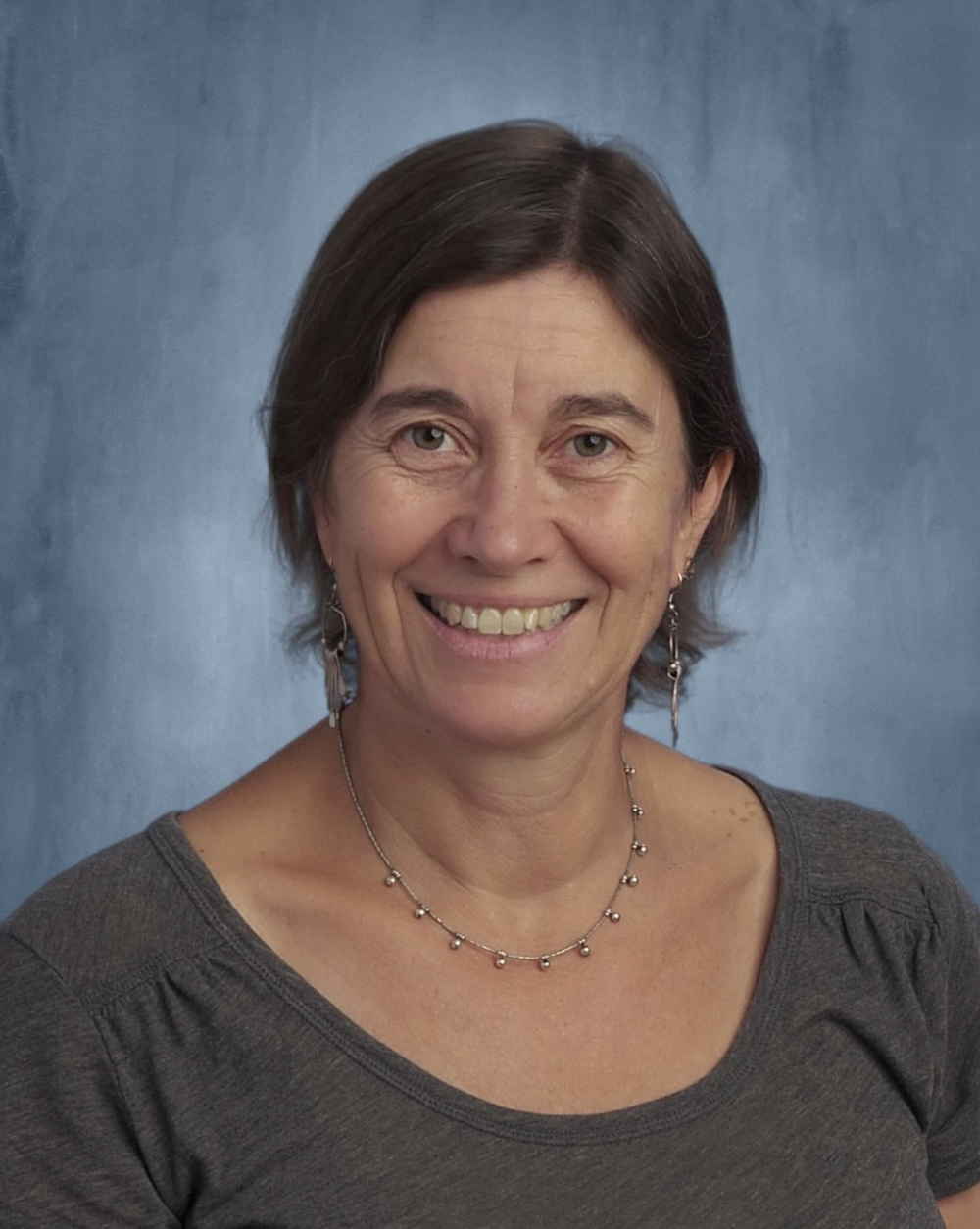
Berkeley Unified School District (BUSD) has emerged as a compelling model for building a culture of repair, connecting classroom learning with school district sustainability policies, community repair advocates, high school clubs, and the larger Berkeley community. At the center of this initiative are Ellen McClure, who coordinates the district’s Climate Literacy Initiative, and Debbie Lenz, a longtime STEM educator and supervisor of the middle schools’ MakerSpace program. Together they’ve transformed repair from an abstract value into a taught skill and mindset for students in the three middle schools’ MakerSpace classrooms Debbie oversees.
Debbie’s repair curriculum and instruction is part of a unified, multi-faceted vision incorporating the pedagogical possibility inherent in repair, the opportunity to take material steps in addressing climate change, and the chance for the school district to serve its larger community. It’s grounded in the idea that a MakerSpace classroom offers fertile ground for repair education to take root. The result is not simply a week-long in-school repair unit, but an integrated approach in which students learn how things work, why fixing broken objects matters, and that they have the capacity to fix them.
Debbie and the Middle School MakerSpace
With an academic background in engineering, Debbie has over 30 years of experience as a math, science and technology educator in Oakland and Berkeley. She created the Berkeley MakerSpace curriculum and supervises that program across BUSD’s three middle school campuses.
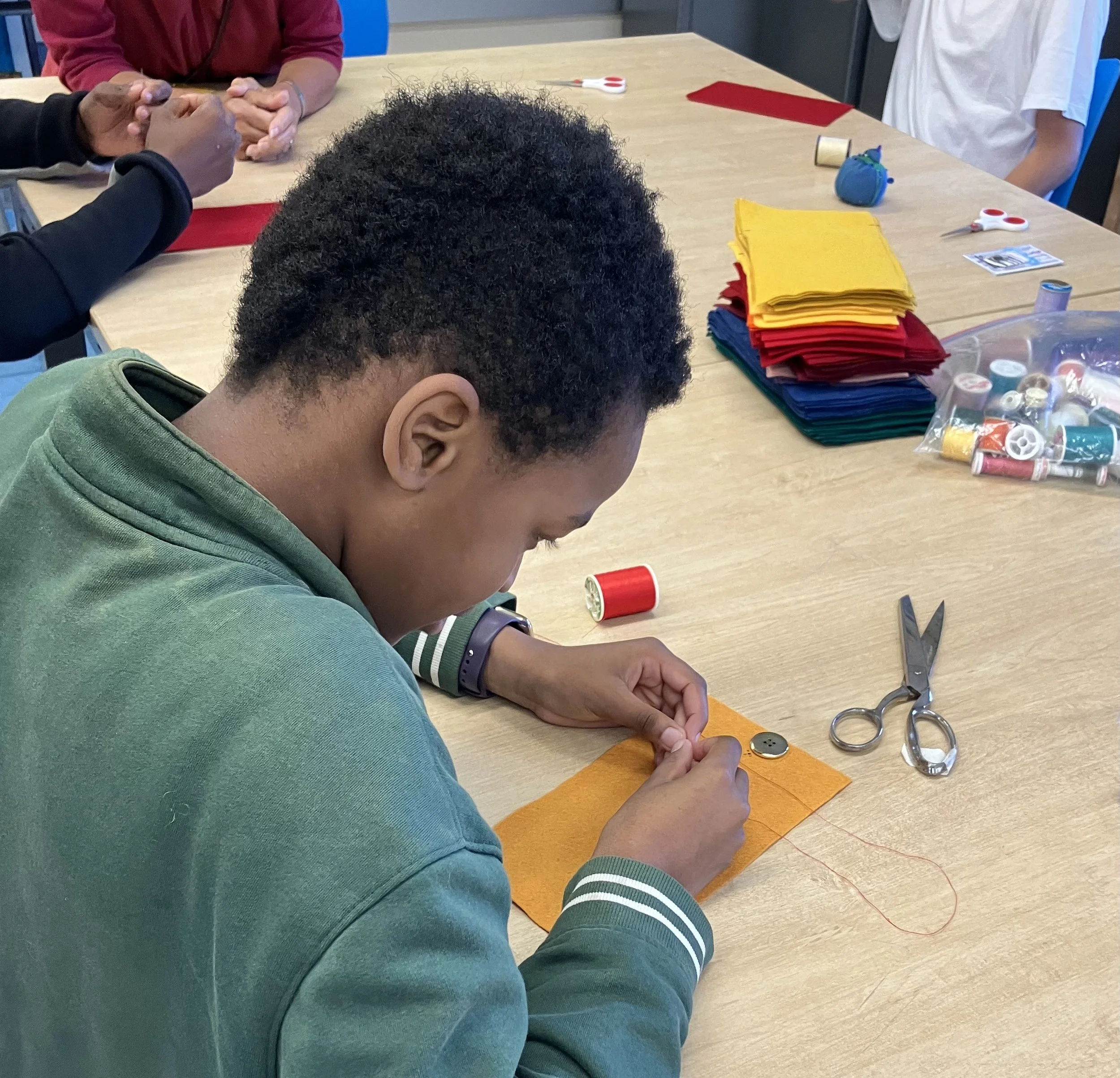
MakerSpace class on learning to sew, October 2025, Berkeley Unified School District, California USA
The MakerSpace elective was originally designed to introduce students to Career Technical Education (CTE) pathways before they reached high school. As Debbie describes it, the class is “a sampler,” offering students hands-on exposure to tools, technologies, and creative practices tied to various real-world applications, equipping them to make more informed decisions about specialization in high school.
Pedagogically speaking, the MakerSpace curriculum stands apart from Debbie’s math and science classes’ curricula, as core academic subjects are tightly shaped by state standards and assessments. Makerspace allows ongoing, project-based learning with significant autonomy for both students and educators. Projects are always connected to real-world applications and students are encouraged to explore and experiment with their interests.
The seed for bringing repair into BUSD was planted in October 2023 when Debbie and Ellen attended a “Cultivating a Repair Mindset” workshop offered by Agency by Design Oakland, a maker-centered professional development non-profit. [See Note 1]
Charged with bringing climate literacy into district-wide curriculum, Ellen immediately saw repair’s relevance to the environment. (Read about this in Ellen’s Note from the Field.) Repair’s relevance to maker education was clear to Debbie. And both saw the potential in linking classroom learning to a community repair event.
Ellen began coordinating BUSD’s first Fix-it Fest, while Debbie launched into designing a repair curriculum for the MakerSpace classes, to be taught during the week leading up to the repair event.
Through this unit, Debbie hopes to introduce students to the idea of repair as an option to throwing something away, and to give them some hands-on experience using tools to do simple repairs they might encounter in their lives. This is direct implementation of BUSD’s commitment to bring climate literacy into curriculum district-wide.
Beyond this, Debbie sees that repair can enrich her objectives in MakerSpace education. Some of repair’s thinking skills, processes, tools and materials are the same as what students experience in making, but others are complementary. Repair broadens and deepens their experience as they explore the technology, engineering and design pathways they’ll encounter in high school and beyond. Students begin the one-week unit learning about the context for repair – the environmental impact of consumerism, the circular economy, and right to repair. Design and functionality are explored through taking apart and reassembling kitchen timers. In the last two days students learn how to patch bicycle tubes, sew on buttons, and repair Chromebooks – skills immediately important to students: their looks, their mobility, and their technology.
Why Repair Belongs in the Makerspace
For Debbie, repair belongs in the MakerSpace not only because the class involves making and the classroom is replete with tools and supplies, but because of the curricular flexibility mentioned above. “As a science or math teacher, I probably couldn't afford to take a week to teach repair because of the pressure to cover state standards and perform well on state tests.”
Repair teaches foundational engineering and design skills, but it also offers essential and broadly useful life-building skills, such as diagnosing problems and understanding systems. Repair curates a basic understanding and ability to simply to be an engaged community member — caring for what you have instead of throwing things away.
Teaching about repair is aligned with district-level priorities around climate literacy and waste reduction. In 2021 the school district made an explicit commitment to sustainability – BUSD Climate Literacy Initiative – and repair makes climate action tangible for students. By extending the life of everyday objects, students experience environmental responsibility not as an abstract concept but as a hands-on practice relevant to their material reality.
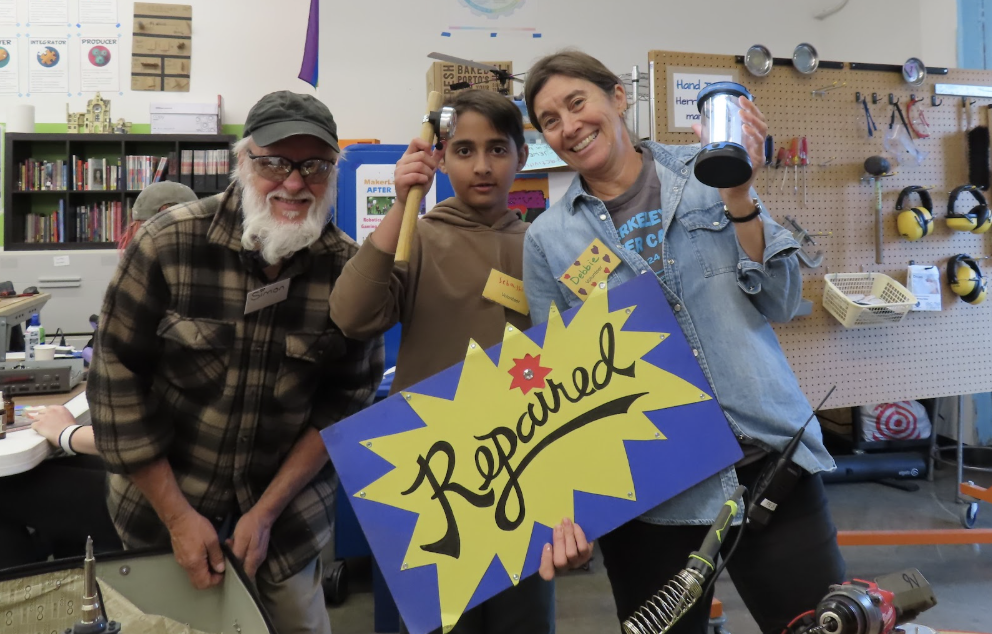
Community Volunteer Simon Lang, 7th-grade student Sebastian, and Debbie Lenz, after repairing Debbie’s camping lantern at King Middle School Fix-it Fest, November 2024.
The Role of Community Volunteers – Repair Advocates
Just as important, repair is inherently social. It depends on shared expertise, collaboration, and intergenerational knowledge exchange. Bringing repair into the MakerSpace classroom allows students to see learning as something that happens not only in classrooms, but also alongside neighbors, family, and community advocates.
A handful of volunteers help teach the bicycle, textile and computer repair activities. Volunteers are almost entirely drawn from the roster of enthusiastic repair advocates who organize and help fix at local community repair events – Transition Berkeley’s Repair Cafés and Fixit Clinics. Local organizations Nimble Repair and The Culture of Repair Project also pitch in.
More adults in the room brings needed expertise and allows for both greater flexibility and more hands-on instruction. As Debbie says, “If you want to give students a meaningful repair experience, you need a lot of support. It can’t be done alone.”
Fix-it Fest: Repair as a Community Practice
Linking classroom instruction with a community repair event was part of the repair initiative from the beginning. But rather than just lend school space for someone else to host the event, the school district took ownership, drawing on the support of local experienced repair and climate advocates to help organize and staff events.
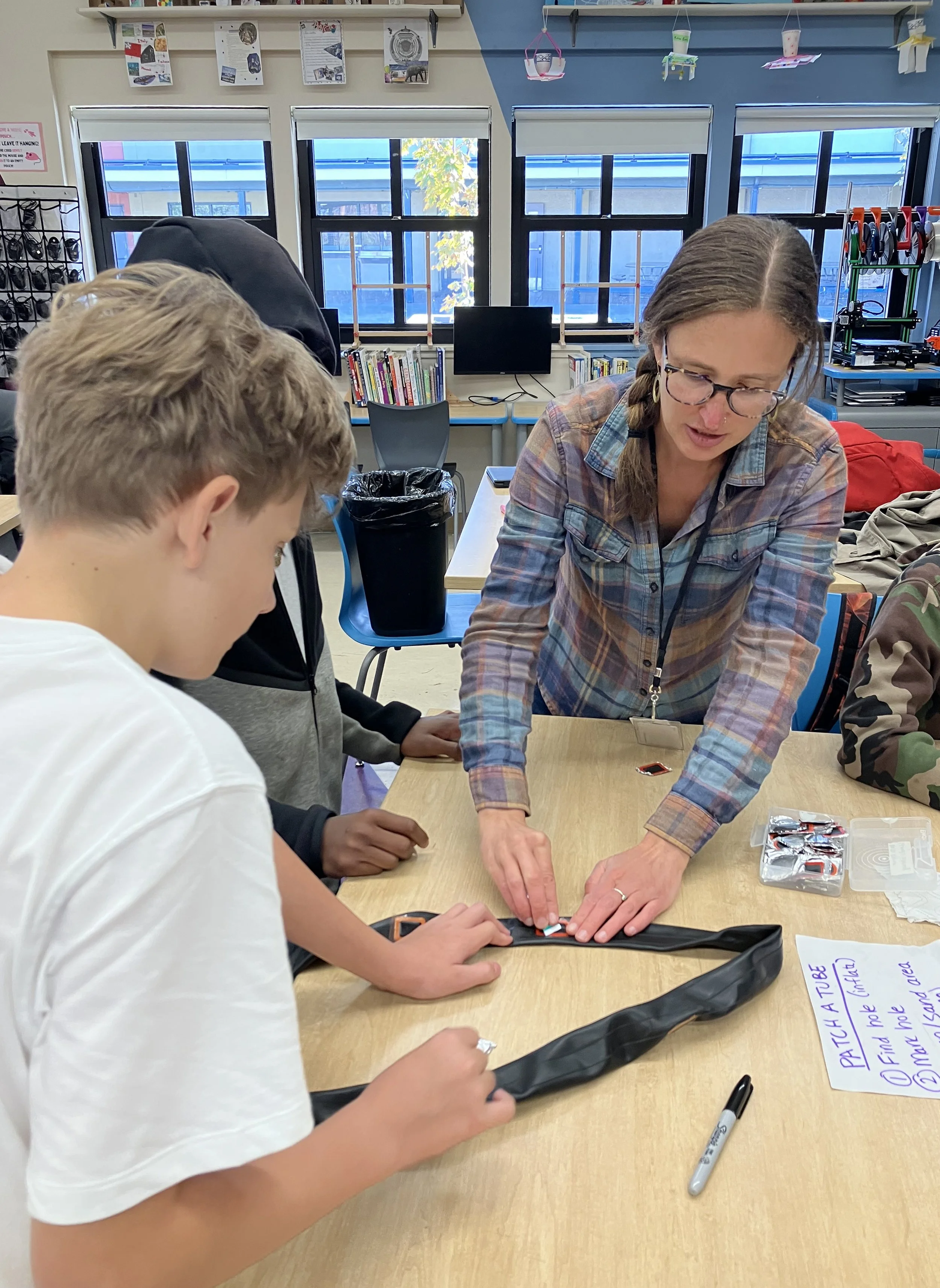
Ellen McClure, BUSD’s Climate Literacy Coordinator teaching bike tire repair.
Owning the events is an institutional commitment that ensures repair is embedded within school culture, and that communicates repair’s importance authoritatively to the community.
Debbie works closely with Ellen McClure, as well as retired educators, local repair advocates and BUSD’s tech department. These collaborators bring essential expertise and capacity into both the classroom and Fix–it Fests, offering the essential time and expertise no single teacher could provide alone.
Fix-it Fest also shapes the classroom experience as Debbie designs the repair unit to lead up to the event, helping students see their learning as connected to something real, large, and important to adults community-wide. Students are encouraged to attend Fix-It Fest, bringing broken items, volunteering alongside repair coaches, and witnessing repair as a shared practice.
What’s Possible
The success of repair education at BUSD’s middle school is inseparable from strong district support and deep community partnerships. Debbie and Ellen hold positions that provide the time needed to create new curriculum and plan, organize, and run Fix-it Fests. While repair itself is relatively low-cost, bringing repair into the schools depends on institutional and community investment.
The impact of repair education shows up in many ways. Students become more comfortable using tools, learn how things work, and are more willing to attempt fixes. Many take these skills home, sharing them with family members and volunteering at Fix-it Fests.
In advanced MakerSpace classes, students have gone even further, like repairing dozens of Chromebooks and returning usable devices to the district as take-home computers. In doing so they are not only learning technical skills, but also contributing real value to their school community.
For educators and repair advocates interested in similar work, Berkeley offers a good roadmap:
start with your classroom MakerSpace,
establish strong partnerships with local repair advocates,
anchor learning in community repair events, and
align the initiative with climate literacy and waste reduction goals at the district level.
When schools own the vision and community resources are integrated into the program, MakerSpaces can mine repair for all it has to offer in cognitive, fine motor and personal development, and become powerful engines for building a culture of repair inside of and far beyond the classroom.
Find Out More About Various Aspects of Berkeley’s Repair Initiative
Ellen McClure – Note from the Field on Repair and Climate Literacy
BUSD Middle School Repair Unit Curriculum
Kimberley Schroder, Repair Advocate – Note from the Field on teaching repair in Berkeley High School
Berkeley High School Robotics Team – Note from the Field on participating in Fix-it Fest
About Debbie
Debbie is currently a MakerSpace teacher at Willard Middle School, Berkeley Unified School District, in Berkeley California, and has taught math, science and technology in Oakland and Berkeley for 30 years. As a Teacher on Special Assignment she developed the STEM/MakerSpace program for 6th - 8th grade, and currently supervises the program across Berkeley’s three middle schools. She works closely with Community Resources for Science, located in Berkeley and serving the East Bay.
Debbie is a graduate from the University of Michigan with a Bachelor of Engineering in Naval Architecture and Marine Engineering and holds teaching credentials in Math and Physics. She received her teaching credential through Cal State Hayward, and has a masters in Educational Leadership from National University.
Debbie enjoys learning how to fix things so that she can manage the majority of her home and clothing repairs.

Note 1: Agency by Design Oakland is a maker-centered educator professional development nonprofit located in Oakland California, USA. Together with Maker Ed and The Culture of Repair Project, they collaborated to develop the Cultivating a Repair Mindset Toolkit, published in late 2021. The Toolkit is grounded in and further develops the Maker-Centered Learning pedagogy, strategies and tools developed by Project Zero, a research arm of Harvard University’s Graduate School of Education.