This resource is for both Educators and Repair Advocates.
A consistently successful model for bringing teaching about repair into schools combines classroom instruction with school-hosted community repair events. This model harnesses the energy and resources of community repair event volunteers to advance educators’ objectives, and uses the openings offered by the classroom to advance repair advocates’ objectives. This approach is accomplished effectively through pairing in-class instruction about repair with an event owned and led by educators, with both instruction and event supported by community repair advocates.
“Repair advocates” are community members enthusiastic about repair, typically volunteers from Repair Cafés, Fixit Clinics, Restart Parties, and related repair events.
This resource is about school-hosted community repair events, supported by repair advocates.
For a resource on repair advocates supporting in-class instruction, go HERE.
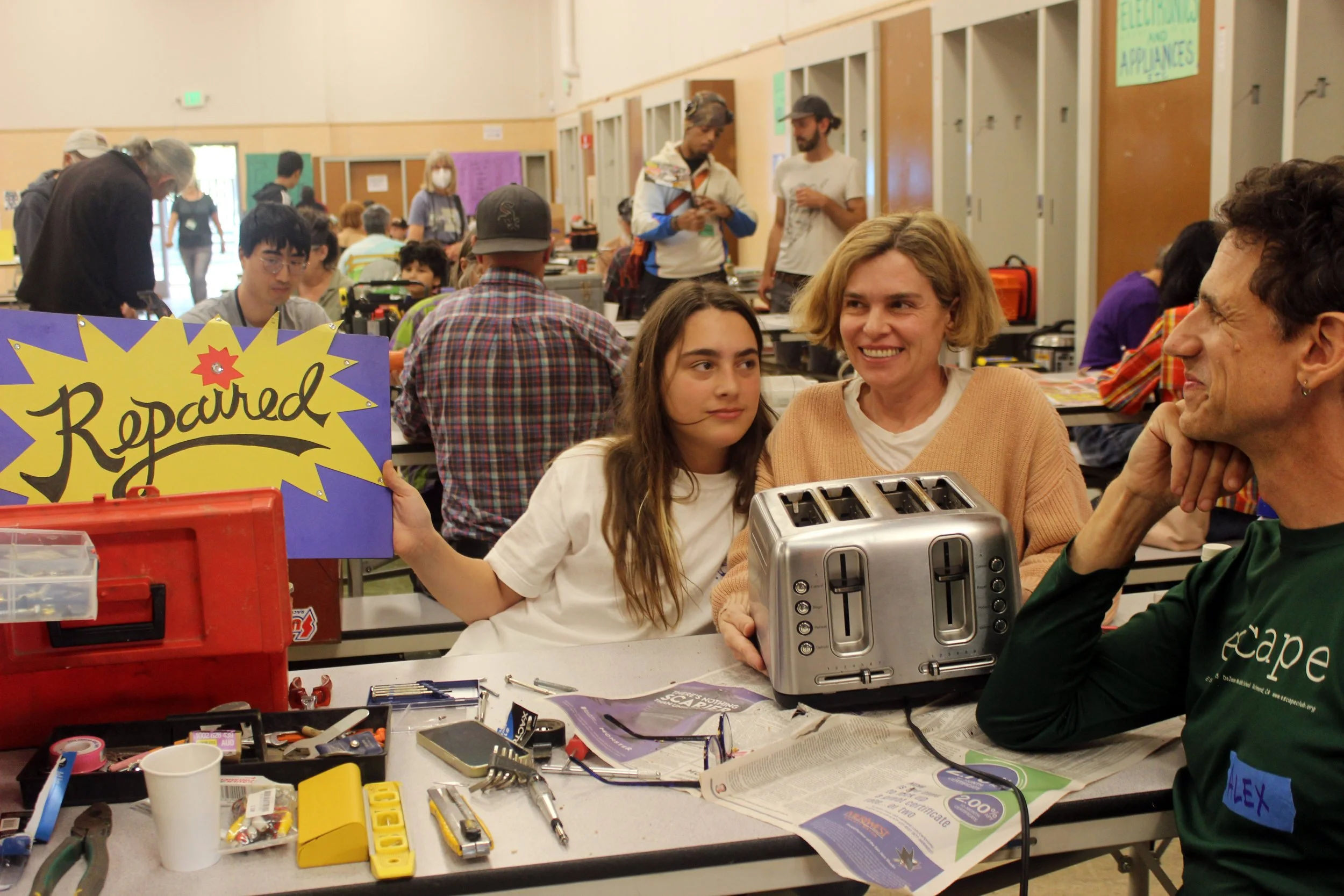
Toaster Fixed! At Berkeley Unified School District’s Fix-it Fest, Willard Middle School 2024, California USA
Schools and Community Repair Events
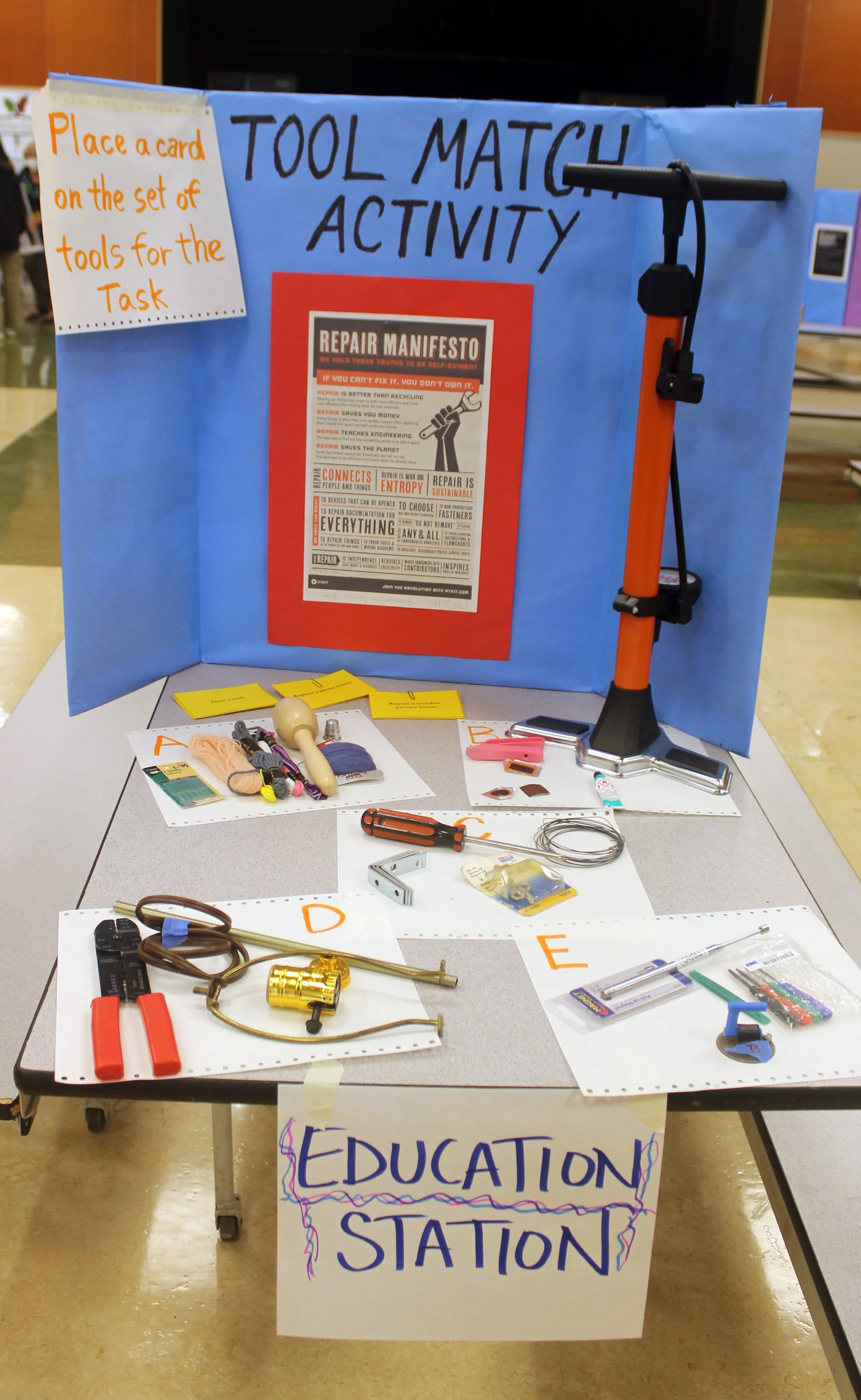
Education Station at Willard Middle School’s Fix-it Fest, Berkeley Unified School District, California USA
Communities' responses to repair events -- Repair Cafés, Fixit Clinics, Restart Parties and related -- is impressive for its irrepressible enthusiasm and consistency across contexts.
Neighbors helping neighbors repair their broken objects unleashes a universally-held desire to take care of our things and of each other. The abundance of goodwill, creativity, generosity and resourcefulness catalyzes into an energy that lasts far after the repair event.
Linking local educational settings with the local repair community creates rich opportunities for each to advance its own objectives, while at the same time furthering a culture of repair.
Schools hosting repair events, especially in conjunction with a repair unit in class, with the support of community repair advocates, accomplishes infinitely more than either educators or repair advocates could independently.
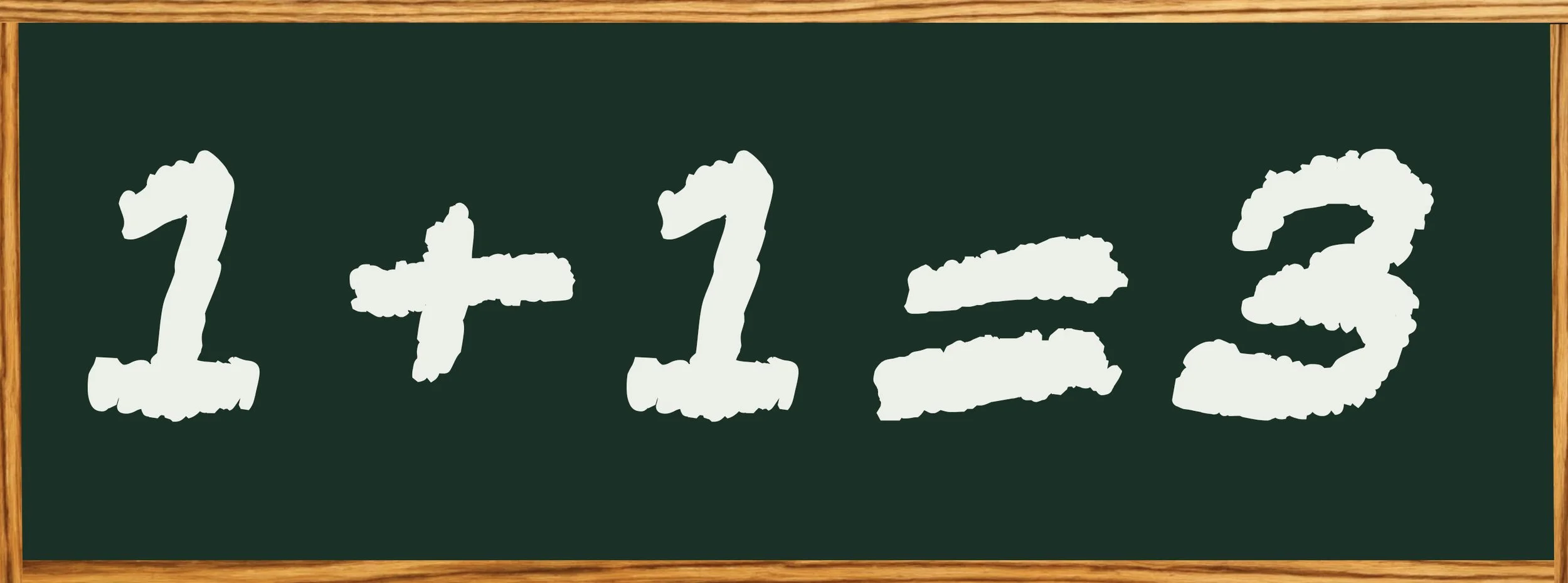
Educators + Repair Advocates = Impact
Benefits to Schools of Hosting Repair Events:
Serve and engage with the larger community well beyond those already involved with the school
Address environmental issues visibly and tangibly
Offer a place for citizens with different viewpoints to collaborate in generosity, goodwill and mutual respect, toward a mutually held value
Offer a place for cross-generational learning
Create significant goodwill toward the school in the larger community
Feature STEM / Makerspace, Climate Literacy and/or Career and Technical Education programs to the community
Benefits to Community Repair Advocates of Supporting Schools:
Greatly extend the visibility of the repair message, and the size and reach of events, through the school’s professional network and communications infrastructure
Augment the power of the message through the legitimization lent by the school’s authority
Expand the size of the volunteer pool: fixers, hosts and organizers
Diversify the volunteer pool, drawing from across the community
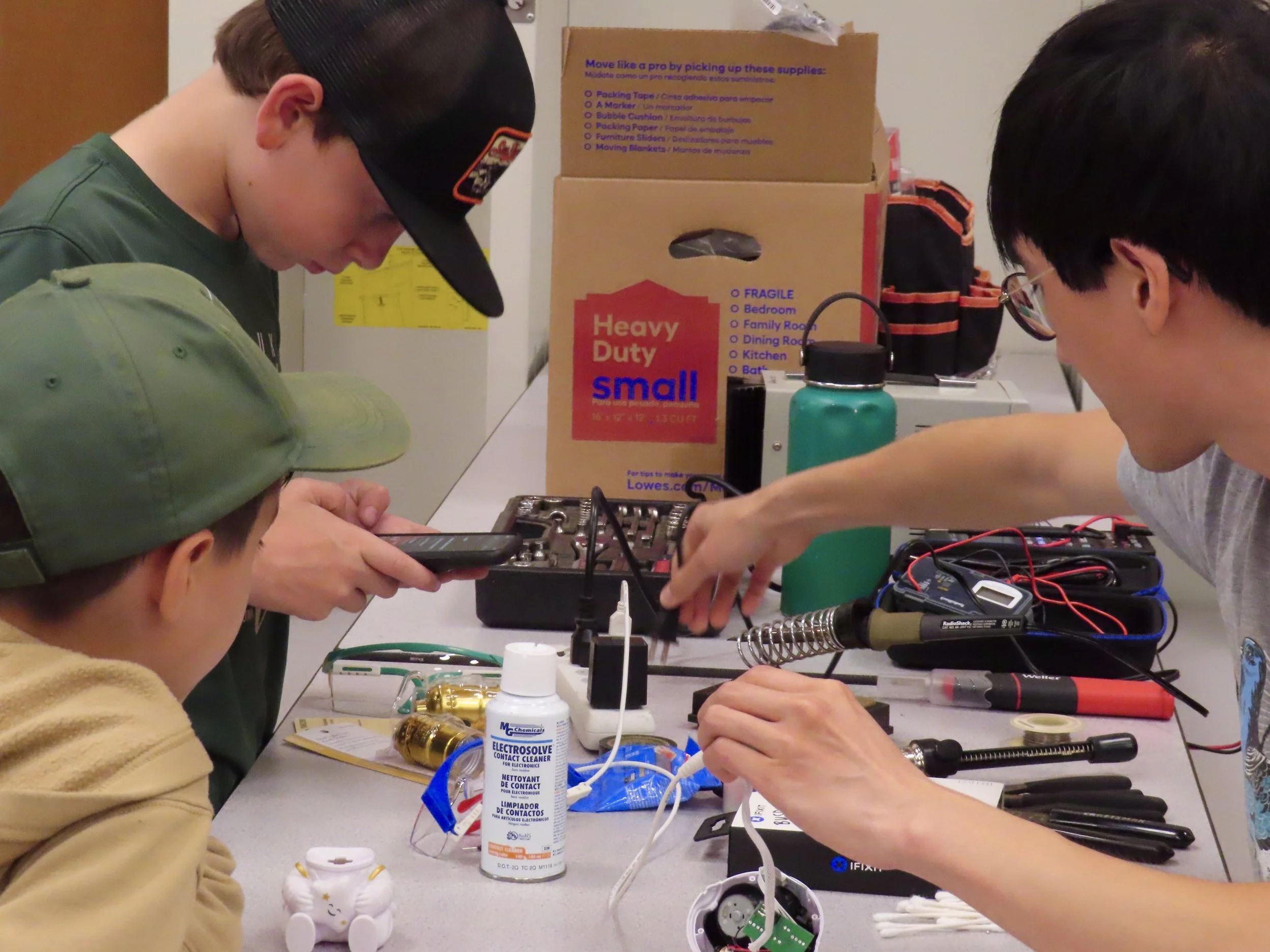
Students learning to solder at Fix-it Fest 2024, Willard Middle School, Berkeley Unified School District, California USA.
Schools
You need:
Organizing expertise
Organizing help
Fixer expertise
You have:
Venues
Communications network
Authority
Parent and other volunteers
Repair Advocates
You need:
Venues
Visibility of the event and the message
Legitimacy of the message
More volunteers
You have:
Fixers with experience and technical expertise
Organizers with experience and technical expertise
Hosts with experience and technical expertise
Understanding of the repair message
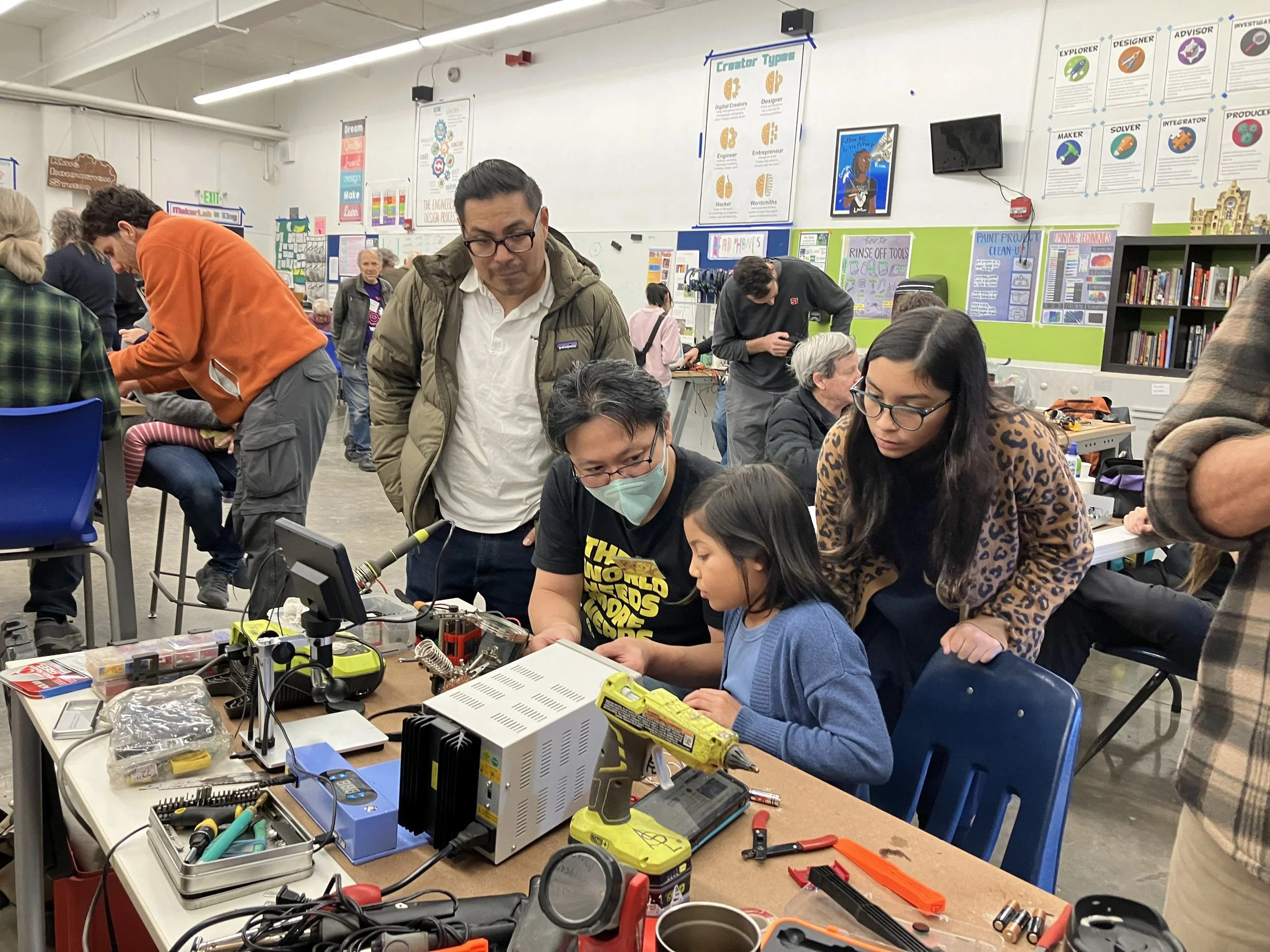
Family repair at Fix-it Fest 2024, King Middle School, Berkeley Unified School District, California USA
Basic Elements of an Effective Model:
Community repair advocates:
Bring event experience to the collaboration
Robustly participate, hands-on, in organizing and executing events (scheduling, venue, registration and flow, safety, marketing, etc.)
Recruit fixers and hosts from the local pool of volunteers
Educators:
Own the project — the educator is the decider, point person for information flow, and central coordinator
Understand how repair furthers your objectives
Tie the event to in-class instruction
Tie the event to school programs, policies and initiatives (climate literacy, waste reduction, resiliency, etc.)
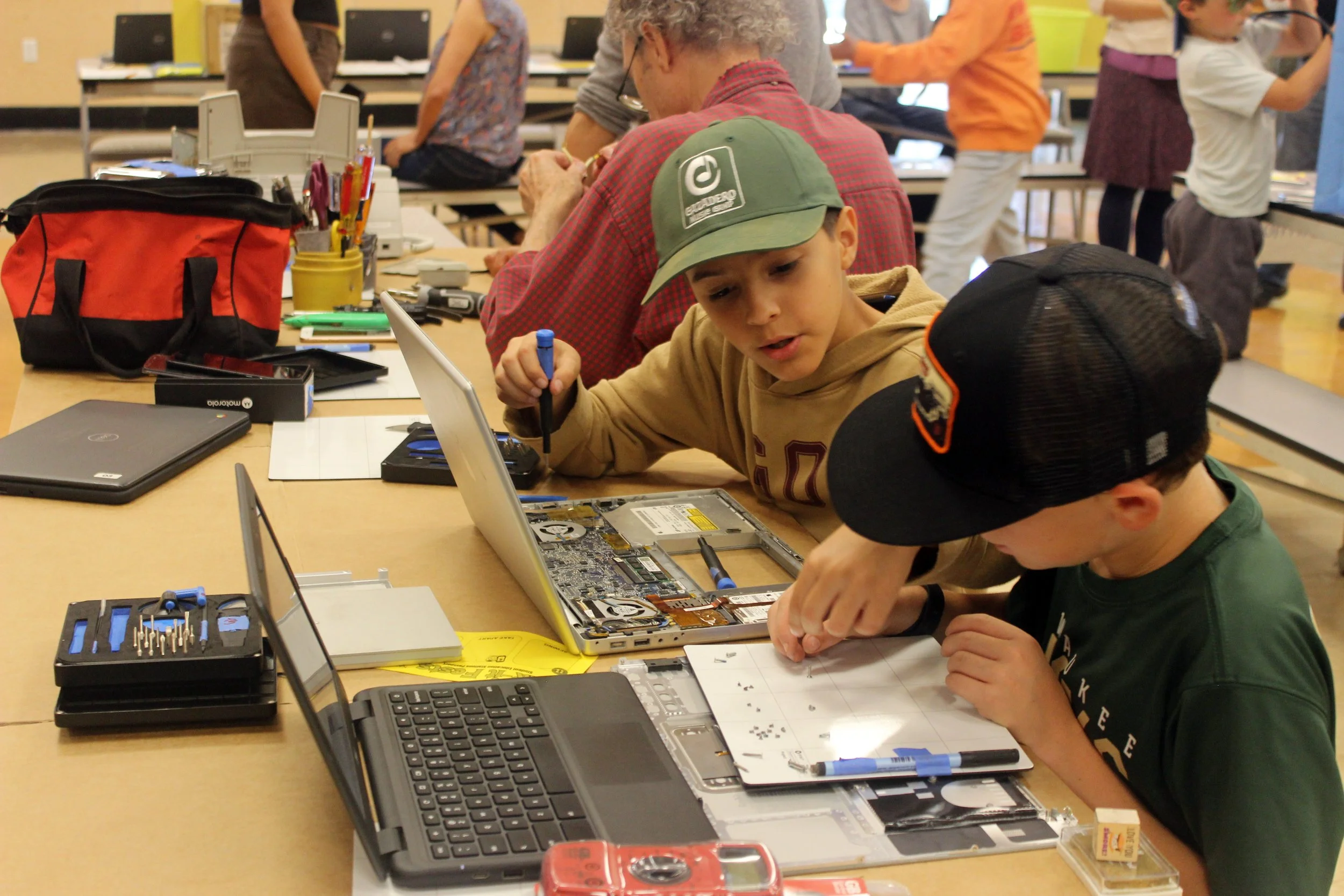
Students at the take-apart table at Fix-it Fest 2024, Willard Middle School, Berkeley Unified School District, California USA
-
Educators’ objectives in Makerspace/STEM, CTE and environmental literacy programs are particularly well-aligned with repair’s pedagogical possibilities.
Climate / Environmental Literacy
Putting objects back into working order, extending their useful lives, makes abstract envoronmental and climate concepts concrete, personally relevant and actionable.
Career and Technical Education (CTE)
Repairing broken objects invites learning a wide range of cognitive skills -- problem-solving, resourcefulness; technical skills -- fine motor, soldering, sewing, 3-D printing, woodworking, etc.; and technical knowledge -- materials and processes.
STEM/Makerspace:
Taking apart and repairing broken objects calls on and deploys learning from other classes into students' real lives -- electromagnetism, complete circuits, calculating area and volume, converting measuring units. Working on objects they're interested in places the hook for pursuing STEM and design education and advanced training.
-
”Repair advocates and enthusiasts” are people enthusiastic about repair. Of all stripes. Electronics, clothing, furniture, jewelry … It’s astonishing what people know and are excited to share.
Many communities have Repair Cafés, Fixit Clinics, Restart Parties, or related repair events. Many have tool lending libraries. There are Maker Spaces almost everywhere. Each place is ripe for soliciting help.
If you have an organized repair group near you, they will almost certainly be thrilled to hear from you and will do what they can to help you think through possibilities.
To find a group hosting events near you:
Three organizations sponsor hundreds of events in all quarters of the world, and there are many, many independent organizations:The Restart Project — The UK, Europe and Virtual
Events listed here.Repair Café — Worldwide
As of February 2026 there are over 3800 around the world and over 200 in the USA, from San Francisco to the Hudson River Valley to Houston to Pasedena, to St. Petersburg and everywhere between.
Events listed here.Fixit Clinic — USA and Virtual
Fixit Clinic has hosted hundreds of events around the US. Events are listed here.A handful of the many, many independent groups follows.
An internet search will turn up scads more.
Search on: Fixit Fair, Repair Fair, Repair Cafe, Fixit Clinic, …Repair PDX — Portland, Oregon USA
King County Repair Events — Seattle end environs, Oregon USA
Philly Fixers Guild, Repair Fair — Philadelphia, Pennsylvania USA
Fix-It Fair — Eugene, Oregon USA
Fix-it Fests — Berkeley, California USA -
How to Host a Fixit Clinic at School outlines the steps for setting a volunteer-led event, but the logistics for setting up a school-led event are largely the same.
See How to Start One for resources for establishing community repair events in any setting.
Armá Tu Club en la Escuela(Spanish) An excellent guide that also aligns aspects of repair with academic subjects. Translating this document is why they developed AI.
Repair Kids Manual (German)
-
Secure the highest level authorization possible, e.g., the district.
Maximize schools’ communication systems — notes in packs, PTA, postering, list-serves, …
Create wide cross-sector engagement through tabling, in-kind contributions, and volunteer support: e.g., municipal zero waste commissions, waste management authorities, tool lending libraries, environmental nonprofits, etc. Also local hardware, pizza and grocery stores.
Invite the school board / board of trustees, as well as other school officials.
Engage district departments: information technology, building and maintenance, sustainability, …
Involve high school student clubs and teams as fixers, e.g., the the robotics team and the sustainable fashion club.
Maximize use of waiting time to communicate and engage — take-apart activities, demonstrations, tabling, …
-
See Repair Events for an overview of what community repair events are.
Note by Ellen McClure, district-wide Climate Literacy Initiative coordinator, Berkeley Unified School District
Note by Anna Williams and Hazel Lutzker, Berkeley High School Robotics Team